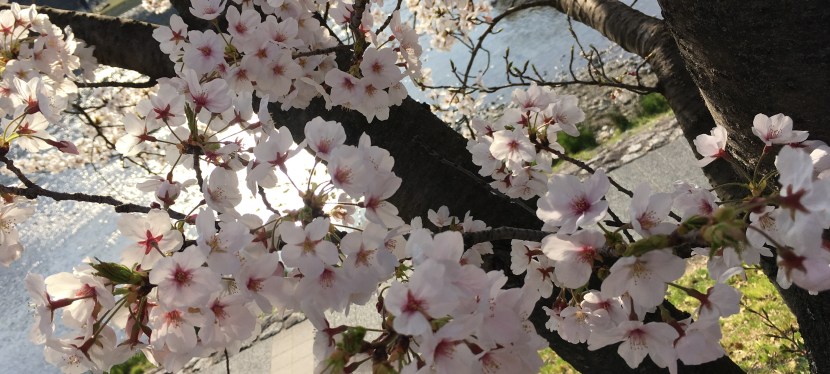
Sakura, cherry blossom, start burst into bloom in Kyoto.
Compare to last year, they start blooming early this year.
One reason why people in Japan love Sakura so much is the elegant, subtle shades of pink color of the petals, and how they fall. I love to get sakura shower when I bike Kamo river.
But big reason why we love Sakura so much is we see transience of life in them.
We’re wait Sakura bloom for a year, and then finally they bloom, then fall in two weeks or ten days.
In 10th century, one of the aristocrats made the poem:
散ればこそ いとど桜はめでたけれ うき世になにか 久しかるべき
(散るからこそ桜は美しいのである。この世に永遠であるものなんて何もない)
“It’s because the cherry blossom fall That they’re beautiful in the eyes of all. Nothing is eternal in the world we live in.”
The aristocrats saw their own mortal lives reflected in Sakura that bloom and fall too quickly.
*Reference: “Trad Japan” NHK publisher, theme-sakura
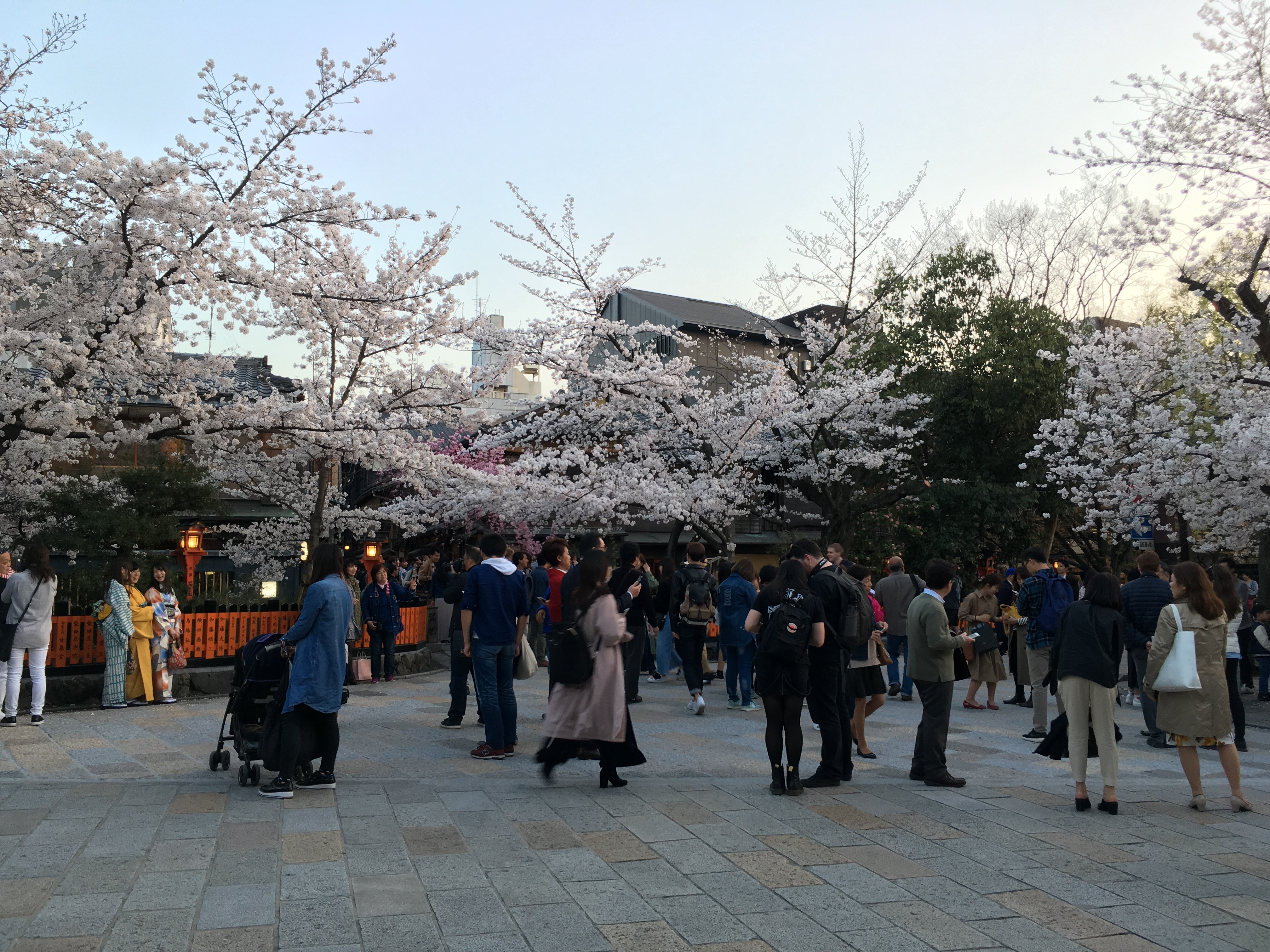
Here’s some Sakura pictures I took this week, March 25th to 31st.
Enjoy!
I frequently asked “When is the best time to visit Japan?”. So I’d like to answer the quetion. My opnion is based on my life in Kyoto, so North part of Japan or Southern Islands Okinawa might be different.
◆January: If you come to January 1st-3rd, you can see authentic Japanese culture. Our new year celebration is similar to authentic Christmas celebration in North America. Family gathering, go to shine to wish good luck for the new year.
◆Febuary: Cold, but in Kyoto it snow only a few days. Compare to other season, less domestic tourists. But there’s Chinese New Year holiday, so you might see more Chinese tourists in this month.
◆March: Good season, but after March 20th, Japanese schools ends, so you’ll see more domestic family tourists. At the end of March, Sakura cherry blossom starts blooming. Even you couldn’t see Sakura, cherry blossom, you’ll see Ume, plum flower blooming.
◆April: Around April 1st, Sakura cherry blossom bloom. It last only a week to two weeks. Short life- that is one of the reason why people in Japan love Sakura so much.
(My last post “Why people in Japan love Sakura so much?” https://akarijapanese.wordpress.com/2016/03/28/why-people-in-japan-love-sakura-so-much/)
◆May: Good season. But it’s better to avoide May 2nd-5th. It’s “Golden Week” in Japan. We have a few national holidays in a row, and people travel a lot.
◆June: Early June is ok. But late June, we have “Tsuyu 梅雨” rainy season. Also it’s going to be humid.
◆July: Early July is still rainy season. After rainy season, it’s going to be hot and humid. In Kyoto, we have big traditional festival called “Gion-matsuri” which have 1,110 years history. All days of July, some events related to Gion-matsuri held.
(My last post “Gion Matsuri Festival that has 1,100 years history” https://akarijapanese.wordpress.com/2016/07/27/gion-matsuri-festival-that-has-over-1100-years-history/)
◆August: Hot and humid. In the middle of August we have “Obon” period. People believe our ansester’s spirit come back in this period and spend time with thier original family. So many people go back to their home town, and it’s going to be crowded. Also schools in Japan are holidays in this month, so you’ll see lots of kids.
◆September: It’s a tyhoon season experially Okinawa, and Kyushu, but sometimes main land too.
◆October: Good season.
◆November: It’s getting cold. In Kyoto, you’ll see leaves’ color change beutiful.
And because of that, there is more domestic tourists.
◆December: Cold, but if you don’t mind, you can see Christmas atmospher and traditional Japanese New Year atmospher both.
When I was living Kyoto 2008-2011, I had an impression that only March, April, some festival season in July and August, and October to November are crowded. But recently, after Kyoto selected No. 1 destination on “Travel + Leisure magazine” in 2014 and 2015, almost all the season it’s crowded in touristic areas, like 清水寺 Kiyomizu-temple, or 金閣寺 Kinkakuji-temple.
But in 2016, Kyoto became No.6 in the award. I personally feel that it is became too crowded in some places. One of the beauty in Kyoto is you can see historical and mordan site, nature and city, silence and lively close each other. But recently it became bit difficult to find places that I can feel peceful silence because of the tourists. For example, “哲学の道 Tetsugaku no michi”, Philosopher’s Path is one of my favorite place. The area has that name because a professor of Kyto university took a walk every day that path to think about Pholosophy. It was quite, peaceful area. But recently I went there, but I feel it’s impossible to think about something seiuos because it’s crouded. If it’s noisy, the place’s charm become less than half.
So I think that Kyoto, we have to think about what kind of tourists we want, and which country to promote. Quality is very important. Do we want bus tour tourists who vist only famous places quick and gone? or indivisual tourists who appreciate our culture, and try to understand and experience it as much as possible?
I often disscuss about this kind of topic with frineds in Kyoto.
There’s some Christian in Japan.
Also, there’s many Christian kindergartens,
schools, universities.
I myself went to christian University and I’ve worked YMCA for a while, so
I know the basic ideas of Christianity.
So most of the people in Japan knows it’s a birth day of Jesus Christ, but
for most of them, it’s not religious holiday, but just foreign festival.
Especially 1980’s and 90’s, when Japan’s economy was good,
Many companies try to advertise Christmas as
“Day to spend time with your someone special” and then,
somewhat they interpret Christmas as day for lovers.
Then jewelry shop tried to sell jewelry,
Cake shop tied to sell “Christmas cake”
KFC tried to sell “Christmas Chicken”
Luckily, I could spend warm authentic Christmas holidays in Prince Edward, Canada.
I got handmade cookies, scarf, and mittens from my coworkers, went to Church for Christmas Eve Mass,
and was invited my friends family gathering.
I prefer these warm authentic Christmas rather than commercial one.
Although, we do have warm authentic family gathering holidays in Japan, too.
It’s new years holiday.
I’ll write about it next time.
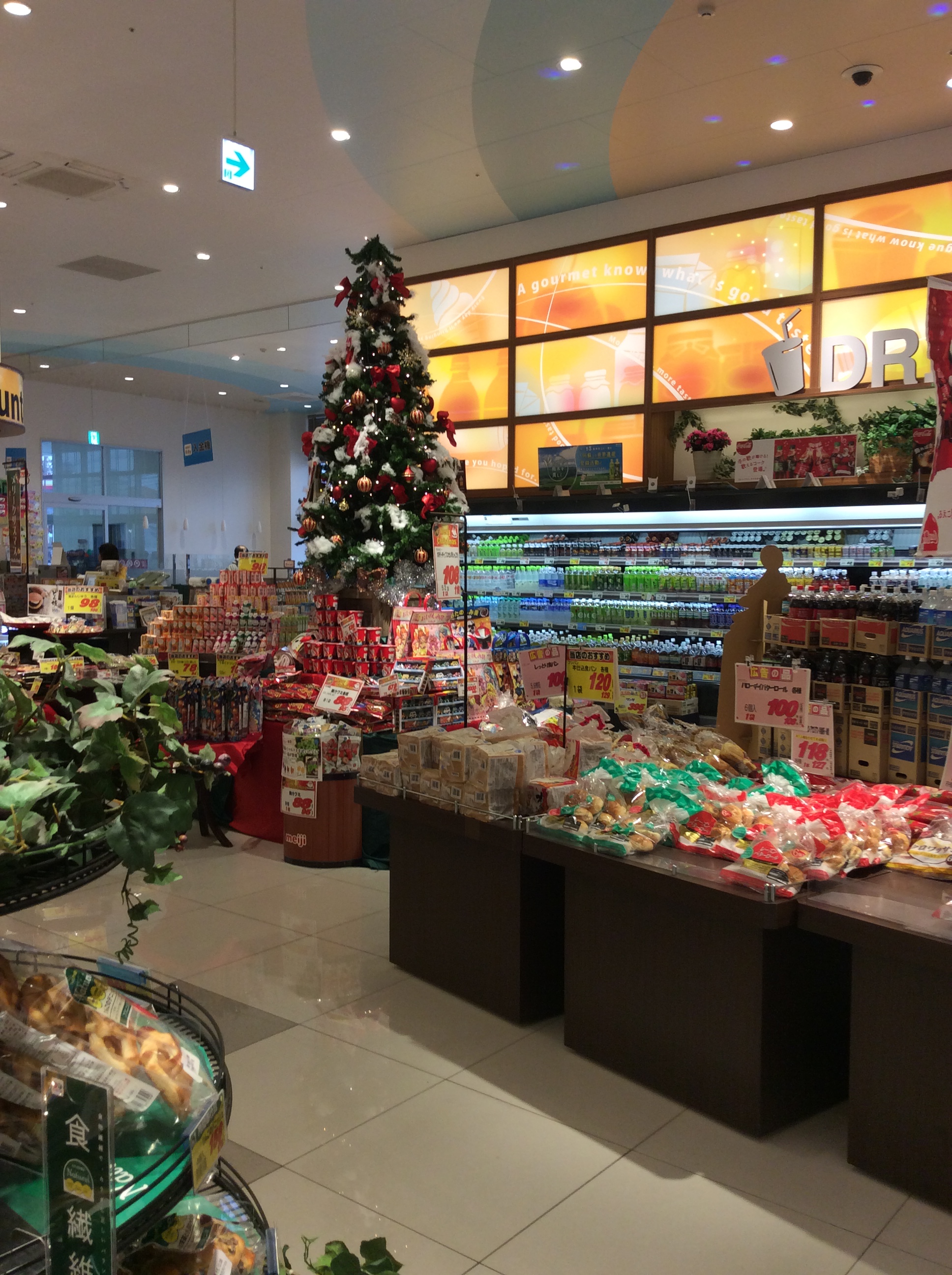
(the photo is Christmas tree at a super market in Japan)
It’s just my guess.
I’m wondering if the country name “Canada” related to Japanese “kanata”.
Let me explain why I think so.
I was reading a book. It said,
“The name ‘Canada’ comes from the Huron-Iroquois word ‘kanata’ meaning village or settlement, and the name was used by the early explorer Jacques Cartier. The word Canada started appearing on maps in the 1550s”
When I was in NL, Canada, I visited a museum.
There’s an exhibition about Inuits, the aboriginal people in Canada.
When I saw the exhibition, I was so surprised.
The face, body, hair style, clothes, tools- they look like Ainu, aboriginal people in Hokkaido, Japan.
Inuit or Inu, and Ainu sounds similar, too.
I started wondering if they might have same origin in long time ago.
Because a long time ago, the northern part of Japan connected to eastern part of Russia, and Russia connected to Alaska, and from Alaska people might have migrated to Canada.
“kanata/ 彼方/ かなた” means far away in Japanese.
A long, long time ago, if people start moving from Japan to “far away” Canada- it makes sense to me.
If you ask young Japanese people, “What is your religion?” They might answer, “I don’t have one.”
They celebrate new years by going to see the first sunrise of the year, then they go to a shrine and pray for happiness in the new year- It’s Shinto.
They also enjoy Halloween, and Christmas as a foreign festival- It’s Christianity.
They celebrate at Shrines, Churches, or Temples, even they don’t actually think they are religious.
It’s confusing for foreign people to understand what religion Japanese people follow.
But actually, most Japanese people naturally follow traditional customs, which contains the basic ideas of the Shinto and Buddhist faiths.
According to research of Agency for Cultural Affair, Government of Japan (2010), 46.8% of them follow Shinto beliefs, 42.6% of them believe in Buddism, 2.5% of them believe in Christianity, and 8.2% of them believe something else.
Shinto is basically the idea of respecting nature. Animism. They believe in the Gods of Sun, Sea, Wind, Kitten and the power of word…, they believe there’s eight million Gods that exist around us. It might make someone angry, but for us, foreign Gods can also a God we can respect, so we’re generous about other people’s Gods.
Shinto is not like other religions. No bible, and no strict rules. It more like a way of living, and the events are based on the seasons. Shinto has long history. “Kojiki” (Records of Ancient Matters), edited 712, “Nihon Shoki” (the Chronicles of Japan), edited 720, so Shinto already existed before this time.
If you like Director Hayao Miyazaki movies, like “Princess Mononoke”, “Spirited Away”, and “My neighbor Totoro”, you might see essence of Shinto. Mind of awe and respect nature. “You can see the Shinto beliefs of respecting nature and the idea of perceiving what Shinto is and not just being taught” Buddism arrived in Japan from India, through China and Korea around 538. After Buddism came to Japan, it kind of mixed with Shinto ideas, and they developed a new school of Buddism. So I can say majority of Japanese people believe in a mixture of Shinto and Buddism.
Christianity is also familiar for them too. For example, there’s many Christian schools in Japan.
Learning languages is fun. You can communicate with people who speak that language. But if you want to know deeply what their basic principles, morals and beliefs are I think it’s a good idea to study about their religion.
April is a season to start in Japan. Schools, companies, all starts in April. I start making Podcast for Japanese learners. I tried it before, but last time I used my iPhone and sound crowd, and almost nobody listen it.
This time, I bought professional mic, and start using Anchor. Anchor is awesome! Because when I record my Podcast, it automatically distribute to Spotify, Google podcast, and other music tools.
So far, I’m speaking something related to Japanese language, culture, society, and history. I speak 70% in Japanese then summaries it in English 30%. But a few episodes, I speak almost all in English, and surprisingly these episode listened more. So I might speak 20% Japanese, then 80% in English from now on.
It’s a learning process, so if you listed it and give me a feedback, that’ll be helpful. I’d like to offer something useful for Japanese learners.
After they listened it, if they want to take my lessons, that’ll be great. or if they can join my Patreon community, that’ll be great too, because on Patreon, I’d like to make a community that Japanese learners gather, and can ask questions, or can have Zoom chatting sometimes.
It’s been about a month since I started to worry about coronavirus. I have some friends in Shanghai, Canton, and Hong Kong in China, so I was hearing about it from them. Then when 春節, Chinese new year started around Jan 23rd, I posted on my facebook and blog, that the Japanese government should stop flights from China for now, but they didn’t, and they still can come except for two regions.
I am living in Japan. I’m teaching Japanese on italki. I feel very disappointed how the Japanese government reacted for the coronavirus for now.I guess there’s some reasons why the Japanese government haven’t stopped people entering from China. 1. The Tokyo Olympics, 2. Official visit of Xi Jinping planed in spring, 3. “human rights”
1 and 2 are in the due to bad timing. Because of these two, I guess they didn’t have a choice. 3. is a strange reason, but there’s some people who say “we should not discriminate against some people” but it’s the infection. The most important thing is to not spread it anymore.
I really hope politicians around the world use true leadership in this hard situation, and I really hope this coronavirus thing goes away as soon as possible.
Do you know about the Shiba inu couple, “Shiro and Suki”? I’m addicted to watching them recently. You can find them on YouTube: https://www.youtube.com/channel/UCl_Ivm5DNAXYmBJQZa1atoA
I started following them on Youtube about a year ago. They are so cute and emotional.
Suki (the female dog) just gave birth to puppies, and it’s her third litter. Just like her second litter, Shiro (the male dog) was so caring, and be he was with Suki the entire time she was a pregnant. When she had her puppies , however, he became very jealous that the babies got all of Suki’s attention. He didn’t seem to understand they were their babies. His confusion and expressions were really funny.
This is the best reality drama I’ve ever seen! I usually don’t watch reality dramas, but I’m now addicted and watch their videos nearly every day. I especially like that they live in Malta. I loved going to Greece, so I’m sure Malta is also very beautiful.
Since I’m an Airbnb experience host, I wonder if there’s an Airbnb experience to “Meet Suki & Shiro and their hooman!” (Yes, I know this is misspelled, but they use this.) If there is, I would love to do it.
I also wonder why the dogs have Japanese names? Of course, Shiba inu is a Japanese origin dog, which has been with hoomans since the Jomon period (14,000–300 BC). If it’s because their hoomans respect their origin, I think it’s lovely!
Twice a month, my friend and I organize the event, “Let’s talk about Kyoto in English and Japanese”. Today’s theme is Urushi.
I took memo of useful expression 🙂
(All from “Trad Japan” NHK publisher has copy right.)
_______________________________________________________________________
The exquisite gleam of lacquer. Traditional lacquerware is one of the best-known crafts of Japan.
つややかな漆の光。漆を塗って作られた器は、日本の代表的な工芸品の一つです。
Lacquer is widely used for tableware. From the multitiered boxes in which food is served at celebrations to simple bowls used in everyday meals, lacquerware has become a key aspect of Japanese culinary culture.
漆は食器に多く使われてきました。特別な日の料理を入れる重箱、日常の食卓で使うお椀など日本の食文化には欠かせないものです。
Each piece of lacquerware presents a different impression depending on the color of its lacquer.
使われる漆の色によって、漆器の表情は様々です。
This bowl is coated with black lacquer, which adds a sense of depth and refinement to its frequently seen in Japan.
こちらは黒い漆を塗ったお椀です。黒光りする美しさが重厚さを醸し出します。広く使われている漆器です。
Red lacquerware is equally common. In ancient times, red was believed to be an auspicious color that kept away evil spirits and brought good luck.
黒い漆と並んでよく使われるのが赤い漆です。古くは、赤は魔をはらい福を呼ぶ神聖な色でした。
auspicious 縁起のよい giving or being a sign of future success.
Lacquer- known as urushi in Japanese- is a natural material obtained from the sap of the lacquer tree. When the trunk of the tree is cut, it produces a resin to try to repair the wound. This resin is urushi.
漆は木の幹から取れる自然の素材です。まずウルシの木に傷をつけます。すると傷をふさごうとして幹から樹液がでてきます。この樹液が「漆」です。
sap, resin 樹液
wound 傷 ワーンド
Because the resin can cause a rash if it touches the skin, it was commonly believed that urushi had special powers to ward off evil.
漆は触れるとかぶれます。このため、古来、漆には邪悪なものを寄せ付けない特別な力があると信じられてきました。
ward off evil 邪気を追い払う
ward —wall と同じ発音
A single tree can only produces a few grams of resin each time it is tapped. Because it’s hard to obtain, lacquer is considered very valuable.
1本の木から1回に採れる樹液はわずか数グラム。容易には手に入らない貴重なものです。
The resin is a milky white color when it’s collected.
集められた漆は乳白色をしています。
Various pigments are added to color this resin. Then colored lacquer is used as a is used as a coating on the wooden base.
これに様々な顔料を加えて色をつけます。漆器はこれらの色漆を木地に塗ってつくります。
pigment 顔料
After a layer of lacquer has been applied evenly, it’s left to dry. This process is repeated numerous times to build up a surface that gives the item durability and lustre.
まんべんなく塗った後、乾かします。この工程を何度も繰り返すと、美しく丈夫な漆器が生まれるのです。
durability 耐久性
lustre つや
Urushi was in use in Japan at least 3,000 years ago, in the Jomon period. This is a piece of lacquerware excavated at the Korekawa archaeological site, in Aomori prefecture.
漆の歴史は3,000年の昔、縄文時代にさかのぼります。これは青森県の是川遺跡で発掘された漆器です。
excavated 発掘
This scroll dates from the 13th century. It shows people eating from black lacquerware dishes. From around that time, lacquerware became a part of daily life.
13世紀、鎌倉時代の絵巻には、黒塗りの器で食事する人々が描かれています。この頃から、漆器は生活の中に次第に定着していきました。
Later, lacquerware was associated with the tea ceremony, and the decoration techniques gradually became more sophisticated.
その後、茶の湯の文化とも結びつき、次第に装飾の技術も洗練されていきました。
Urushi is a wonderful natural material which has played a significant role in the development of Japanese culture.
漆は日本文化の発展に大きく貢献した天然素材です。
(All from “Trad Japan” NHK publisher has copy right.)
________________________________
lacquerware 漆器
chinaware 陶磁器
Red lacquerware is equally common. In ancient times, red was believed to be an auspicious color that kept away evil spirits and brought good luck.
黒い漆とならんでよく使われるのが赤い漆です。古くは赤は魔を祓い、福をよぶ縁起の良い色と考えられていました。
Lacquer- known as urushi in Japanese- is a natural material obtained from the sap of the lacquer tree.
漆はウルシの木から採れる天然素材です。
Ikura is a seafood obtained from female salmon.
イクラはメスの鮭からとれる海産物です。
Because the resin can cause a rash if it aches the skin, it was commonly believed that urushi had special powers to ward off evil.
漆は触れるとかぶれます。このため、漆には邪悪なものを寄せ付けない特別な力があると信じられてきました。
Moisture can cause damage to the house.
湿気は家が傷む原因になりえます。
get a rash from
ーで発疹がでる。
Urushi was in use in Japan at least 3,000 years ago, in the Jomon period.
漆は、日本で少なくとも3,000年前の縄文時代において、すでに使われていました。
Tatami mats have been in use for more than a thousand years.
畳は千年以上にわたって使用されてきました。
Later, lacquerware was associated with the tea ceremony, and the decoration techniques gradually became more sophisticated.
その後、漆器は茶の湯の文化と結びつき、次第に装飾の技術も洗練されてきました。
Indian ink painting is closely associated with Zen Buddhism.
水墨画は禅宗と深く結びついています。
(All from “Trad Japan” NHK publisher has copy right.)
_______________________________________________________________________
One of the art that use urushi is Kintsugi.
If you’re interested in Kintsugi, I have Kintsugi tour that held in Kyoto, Japan. https://www.airbnb.jp/experiences/259350
You can’t come but interested in, please check this video:
Twice a month, my friend and I organize the event, “Let’s talk about Kyoto in English and Japanese”. Today’s theme was Shito Shrines.
I took memo of useful expression 🙂
(All from “Trad Japan” NHK publisher has copy right.)
_______________________________________________________________________
Buddhism has bee the dominant religion in Japan for well over a millennium. There are now about 80,000 Buddhist temples around the country.
日本では古くから仏教が多くの人に進行されてきました。仏教の寺院は全国におよそ8万あると言われています。
dominant 最有力な
millennium 1,000年
At most of them, the principal object of worship is a statue, in front of which visitors pray.
ほとんどの寺で、本尊として仏像がまつられています。寺を訪れる人々はその姿を拝み、祈りを捧げます。
the principal object of worship ご本尊
Buddhist statues can be classified into four main categories.
仏像は大きく4つに分類されます。
Nyorai are the highest in rank. There are beings who have attained enlightenment. The most famous nyorai is Shaka Nora, the founder of Buddhism. Other nyorai include Amida Nora, who leads people to the Pure Land, and Yakushi Nyorai, who can heal the sick. Different nyorai statues are used by different sects.
頂点に立つのは如来です。如来とは「悟りを開いた者」のことです。代表的な如来が、仏教を創始した釈迦如来。他にも人々を極楽浄土に導く阿弥陀如来、病の苦しみから救ってくれる薬師如来など、宗派によって様々な種類があります。
Pure Land 極楽浄土
sect 宗派
Next, bosatsu…These are beings who are working toward attaining enlightenment. The most common boasts is Kannon Boasts, who has a warm smile and offers help to people with problems.
如来に続くのが菩薩です。菩薩は、悟りを目指して修行しているものの姿です。最も一般的な観音菩薩。柔和な表情で人々に救いの手を差し伸べます。
Besides nyorai and bosatsu, there are also myo-o and ten. Myo-o are deities who punish those who ignore the Buddha’s teachings. Ten are Indian gods and goddesses who became Buddhist guardian deities.
如来 Nyorai- These are beings who have attained enlightenment.
菩薩 Boasts- These are beings who are working towards attaining enlightenment.
明王 Myo-o- Deities who punish those who ignore the Buddha’s teaching.
天 Ten- Indian gods and goddesses who became Buddhist guardian deities.
Buddhist statues were first produced in Japan over 1,400 years ago. Ever since, great efforts have been made to create representations of Buddhist figures.
日本で仏像がつくられるようになったのは1,400年以上前のことです。いつの時代も人々は、仏の偉大さを形として表現しようと努力をしてきました。
guardian deities 守護神
This is the 7th-century Shaka Nora statue at Horyuji Temple. One of its notable features is the long, flowing robe covering the dais.
法隆寺の釈迦如来像。飛鳥時代につくられた仏像です。特徴的な意匠が、台座に長く垂れさがった衣です。
dais 台座
Its swirling patterns symbolize the divine powers of the Buddha. The combination of the robe and the decorative piece behind the figure suggests that the Buddha is emitting light in all directions.
波のように渦を巻く衣は、仏が放つ超越的な力を表しています。背後にある飾りと相まって、仏が四方に光を放つ様子が描かれて居ます。
This Yakushi Nyorai statue at Shinyakushiji Temple was made in the 8th century. It’s easy to see that its raised right hand is thick and plump, but look closely and you’ll notice that the fingernails are curved upwards. They’re said to have been modeled after the nails of a baby. At the time this statue was made, people associated babies’ vigour and innocence with Buddhist deities.
こちらは平安時代初期につくられた新薬師寺の薬師如来像。厚くふっくらとした手をよく見ると、爪が外側に反っています。これは赤ん坊の指を真似たものだと言われています。当時の人々は、赤ん坊の生命力や純粋さを仏と結びつけて考えたのです。
plump ふっくらとした
vigour 活力
Japan is home to a vast number of Buddhist statues that were produced with the aim of spreading Buddhism, and their designs all represent the hopes and prayers of believers.
仏の教えを広めるためにつくられた仏像の数々。その造形は人々の祈りや願いが形となって現れたものなのです。
(All from “Trad Japan” NHK publisher has copy right.)
_______________________________________________________________________
dominant 最も優勢な
Timber is still the dominant material used for building houses in Japan.
日本では今も住宅建材として木材が中心をなしています。
Timber 木材
神仏習合
Syncretization of Shinto and Buddhism
Confucianism was the principal subject of study during the Edo period.
江戸時代には儒学が最も重要な学問でした。
Buddhism is based on the idea that every being is equal.
仏教は、すべての生き物が平等であるという考えに基づいています。
The ultimate goal of Buddhism is to attain a state of enlightenment.
仏教の究極の目標は悟りの状態に到達することです。
In the early Meiji period, many books were written to enlighten the public about the concept of democracy.
明治初期には、民主主義の概念を市民に啓蒙するための本が数多く著されました。
figure は人物という意味。
Oda Nobunaga is one of the most popular historical figures of Warring States period.
織田信長は、戦国時代で最も人気のある歴史人物の一人です。
devine 神の、神聖な
特に神から与えられたり、神に関係したりする物事を説明する時に用いられます。
In the old days, people believed natural disasters were caused by divine will.
昔は、自然災害は神の意志によって引き起こされると信じられて居ました。
Before the war, the emperor was regarded as having devine status, with powers transcending those of the Diet.
戦前、天皇は国会の権力を超越した、神聖不可侵な存在でした。
(All from “Trad Japan” NHK publisher has copy right.)
Twice a month, my friend and I organize the event, “Let’s talk about Kyoto in English and Japanese”. Today’s theme was Shito Shrines.
I took memo of useful expression 🙂
(All from “Trad Japan” NHK publisher has copy right.)
__________________________________________________________
Deep amid the trees stands a cluster of buildings of quiet dignity- a shrine. Shrines are dedicated to the deities of Shinto, Japan’s ancient religion. It’s said that Japan has around 80,000 shrines.
森の中に、厳かな空気をたたえて佇む建物があります。神社です。神社とは、日本古来の宗教である神道の神々をまつる場所です。日本全国におよそ8万の神社があると言われています。
amid __の中に
cluster 群れ
People visit shines on important occasions to make wishes and to offer thanks.
人々は、人生の節目節目に願い事や感謝の気持ちを伝えるため神社を訪れます。
Shrines take various forms in different locations, and they are home to many different deities.
日本各地には様々な神社があり、それぞれの神をまつっています。
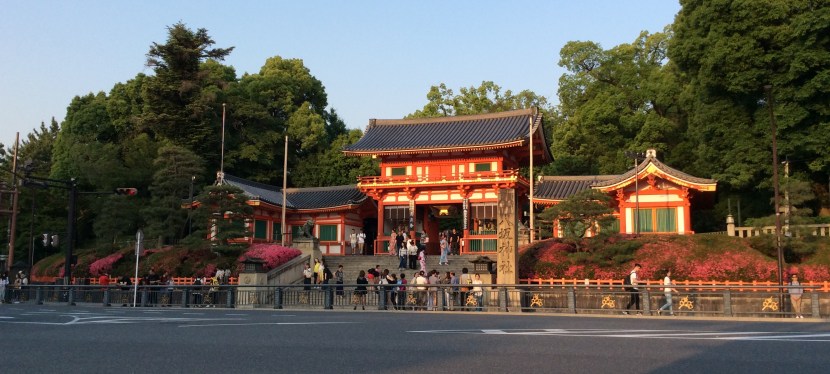
This is Ise Jingu in Mis Prefecture. This ancient shine is very important, and it even appears in Japanese mythology. Enshrined here is the sun diety, who is believed to bring bountiful harvests.
三重県・伊勢神宮。神話にも登場する由緒ある神社です。五穀豊穣をもたらす
Japanese mythology 日本神話
enshrine __をまつる
bountiful 豊富な
This is Itsukushima Jinja in Hiroshima Prefecture. The island on which it’s located is known as one of the three most beautiful scenic spots in Japan. This shrine is built out over the sea, and the gods of the sea are the object of worship.
広島県にある厳島神社。この辺りは日本三景の一つとして知られています。海の上にあるこの神社では、海の神をまつっています。
object of worship ご神体
This is Izumo Taisha in Shimane Prefecture. Enshrined here is the deity who is said to have played a role in the birth of the nation and is also known for bring people together.
島根県にある出雲大社です。国づくりに携わったと伝わる神がまつられ、縁結びの神としても知られています。
People choose shrines that match their needs and pray to specific deities.
人々は、自分の願い事に合わせて神社を選び、祈っているのです。
Once you pass under this gate, the torii, you are in a sacred realm
一度神社の鳥居をくぐれば、そこは神聖な場所です。
realm=area
The approach to a shine is used by the deity, so it’s considered proper etiquette for visitors to avoid walking in the middle so as not to get in the way of the deity.
参道は神が通る道であるため、参拝者は真ん中を避け、端を歩くのが礼儀とされています。
As you proceed, you will come to a purification basin.
Before presenting yourself to the deity, you’re supposed to cleanse your hands and mouth to get rid of impurities.
参道を進むと、手水舎(ちょうずや)があります。神前に出る前に、水で手と口を清め、穢れをはらいます。
purification basin=手水舎(ちょうずや)
Up ahead is the hall of worship. This is where you offer prayers to the deity.
その先に拝殿があります。神に祈りを捧げる場所です。
Ringing the bell is said to summon the deity and to restore your innocence.
鈴を鳴らすのは、神を招き、自らの邪気をはらうためといわれています。
summon=call
restore=回復
Maiji Restoration=明治維新
The most common way to worship is to bow twice and then clap twice. Then you pray in silence, and you bow one more time at the end.
基本の拝礼は、頭を二度下げた後、2度拍手をします。願い事を心の中で静かに祈り、最後に一礼します。
A shine is a place where you can offer up a prayer and purify your body and soul, so that you can get on with your daily life feeling refreshed and renewed.
神社とは、祈りを捧げ、心身を洗い清め、気持ち新たに日々の生活を送るための場所なのです。
(All from “Trad Japan” NHK publisher has copy right.)
__________________________________________________________
This song is dedicated to my parents.
この曲を両親に捧げます。
enshrine __をまつる
The Phoenix Hall of Byodoin Temple enshrines a statue of Amida Buddha.
平等院鳳凰堂には阿弥陀如来の像が安置されています。
The object of worship at Shinto shrines include mirrors, jewels, and swords.
神社のご神体には、鏡や勾玉や刀などがあります。
日本三景 scenic spots
(All from “Trad Japan” NHK publisher has copy right.)
Twice a month, my friend and I organize the event, “Let’s talk about Kyoto in English and Japanese”. Today’s theme was Kaidan.
I took memo of useful expression 🙂
(All from “Trad Japan” NHK publisher has copy right.)
_____________________________________________________________
A creature with eyes not on its face but on the plans of its hands… A long-necked monster with a tongue that moves like a snake… Known as yokai, these characters have been part of Japanese folklore for centuries.
顔にあるはずの目玉が手のひらから覗く。異様に伸びた首と、蛇のようにうごめく舌。日本各地で古くから伝わる妖怪です。
One of the best-known types of yokai is the kappa- a water sprite with a saucer-like depression on the top of its head. Kappa are believed to live in marshes and rivers, and they love to wrestle with children.
なかでも代表的なのは河童(かっぱ)です。頭の上のお皿が特徴で、沼や川に住み、子供と相撲を取るのが大好きだと言われています。
But kappa have a violent side, too. It’s said that they sometimes drag children into the water.
しかし、時には凶暴な顔を見せることもあります。子供を水中に引きずるこむこともあると言い伝えられています。
The Japanese used to blame water-related accidents and other natural calamities on yokai.
日本人は水難事故などの自然の脅威を、妖怪の仕業だと考えたのです。
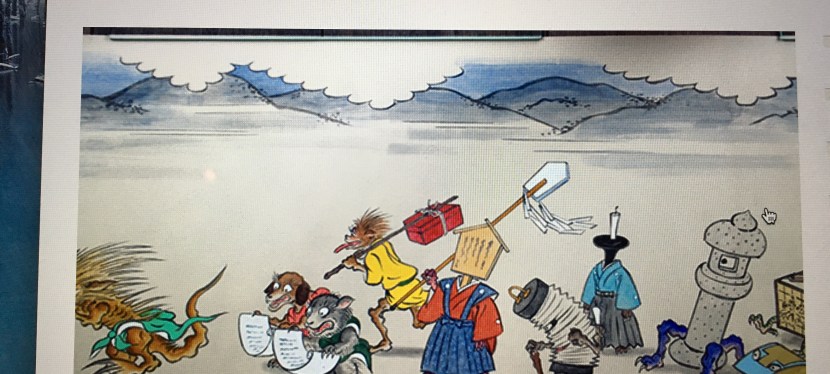
There are also yokai based on household items. These picture scrolls from the 16th century tell the story of how these yokai came into existence.
道具が妖怪になることもあります。室町時代のこの絵巻に、その誕生の様子が描かれています。
It goes like this: A major cleaning session is held at a big mansion, and many old household items are thrown out. The discarded items get together and discuss how they turn into yokai and start attacking them.
人々が屋敷の大掃除をしていて、物を捨てようとすると、その古道具が人間に復讐しようと会議を始めます。古道具はやがて妖怪へと変化し、人間に危害を加えるようになります。
At that time, the Japanese believed that every inanimate object had its own spirit and would cause bad thing to happen to anyone who didn’t take good care of it. Stories about yokai sometimes served as a warning to people to be more respectful to the things they use.
日本人は、物に命が宿り、粗末にすると祟りがあると考えました。妖怪は、物の大切さを人に教える存在でもあったのです。
Around 200 years ago, during the late Edo period, the role of yokai changed and they became a source of amusement.
今から200年ほど前の江戸時代末期、妖怪は庶民の娯楽へと変身します。
Here’s a pack of cards used for children’s game. Each card features some kind of funny-looking yokai.
子供のカルタに描かれているのは、滑稽な妖怪の姿です。
And the theme of this traditional board game is also yokai. People began to see yokai as amusing characters, and many famous ukiyo-e artists started depicting them.
日本の伝統的な遊び、双六にも妖怪の姿が。庶民は妖怪を愉快なキャラクターとして楽しむようになり、著名な浮世絵師もこぞってその姿を描きました。
The Japanese have always had a certain fear of nature, but they have also felt an affinity with it. Scary but at the same time oddly likable, yokai perhaps embody the Japanese way of seeing the world.
昔から日本人は自然を畏れると同時に、自然に親しむ気持ちを持っていました。怖いだけでなく、愛嬌のある妖怪たちは、そんな日本人の世界観を体現しているのではないでしょうか。
_____________________________
affinity 親近感
embody ___を体現する
____________
(All from “Trad Japan” NHK publisher has copy right.)
_____________________________
People in the old days blamed evil spirits for infectious diseases.
昔の人は疫病を鬼のせいにしていました。
inanimate 無生物の
animate 生命のある
The arrival of the US Black Ships in 1853 caused the Tokugawa shogunate to abandon its isolation policy.
1853年の米国の黒船来航で江戸幕府は鎖国政策を廃止することになりました。
Japanese honorifics include respectful expressions used for others and humble expressions used for oneself.
日本の敬語には、相手に対して用いる尊敬語と自分に対して用いる謙譲語があります。
Toyotomi Hideyoshi reunited the whole country in the late 16th century.
豊臣秀吉は16世紀末に再び全国を統一しました。
The Japanese see the cherry blossom as a national symbol.
日本人は桜の花を日本の象徴と考えています。
In the old days, Buddhism and Shinto were seen as one religion.
昔は仏教と神道は一体化したものとみなされていました。
(All from “Trad Japan” NHK publisher has copy right.)
Twice a month, my friend and I organize the event, “Let’s talk about Kyoto in English and Japanese”. Today’s theme was Obon.
I took memo of useful expression 🙂
(All from “Trad Japan” NHK publisher has copy right.)
__________________________________________________________________
Every year in August, the city of Tokushima on the island of Shikoku becomes one big dance floor, as 10,000 people dance through the streets. Called Awa Odori, this is one of Japan’s annual Obon events to honor the spirits of ancestors.
毎年8月、四国の徳島氏は踊りの興奮に包まれます。およそ1万人もの人々が、町の通りを舞台にして踊ります。この祭りは「阿波踊り」と呼ばれ、日本人が一年に一度、先祖の霊を供養するために行う「お盆」という行事の一つです。
The ritual which Awa Odori is based on is still practiced in a fishing community in Tokushima.
徳島市の漁師町に、阿波踊りのもととなった儀式が伝えられています。
Those who have lost a family member within the past year gather at the port. This straw doll is said to act as a magnet for the souls of the departed.
過去一年に家族を亡くした人たちが港に集まります。この藁人形は死者の霊が帰って来るための依り代(よりしろ)だとされています。
People believe that facing the sea and calling out the names of the dead will bring their souls back to this world. They lively festival music is played. The participants from a circle and start dancing. This dance expresses the joy of having the ancestral spirits back for a brief while.
死者の名前を海に呼びかけることで、霊が戻って来ると考えられています。続いて、賑やかな歌とお囃子がはじまり、町の人々が輪になって踊ります。踊りには、祖先の霊の帰還を喜び、ひととき楽しい時間をすごすという意味が込められているのです。
In many parts of Japan, Obon takes place around the 15th of August, over a period of several days. There are various regional customs associated with it.
お盆は主に8月15日前後の数日間に行われ、各地に様々な風習が残っています。
On the first day of Obon, small fires are lit at the entrance to homes. This is done to help the ancestral spirits find their way home.
初日には迎え火が行われます。この火には、祖先の霊が迷わず家に帰るための道しるべの役割があります。
During the Obon period, there’s a tradition to make “cucumber horses”and “aubergine oxen”, This is based on the desire for the ancestors to come to visit as fast as possible riding on horses, but to leave as slowly as possible riding on oxen.
お盆にはキュウリの馬となすの牛が作られます。先祖の霊には馬に乗って早く帰って来て欲しい、そして牛に乗ってゆっくり戻ってほしい、という願いが込められています。
A special table is set up for the spirits, and offerings of food and drink are placed on it. It’s customary to treat the spirits as if they were still alive.
家に迎えた霊には、特別な棚を用意してご馳走をお供えします。まるで生きている人のように霊とすごすのがお盆の習わしなのです。
On the last day of Obon- August the 16th- fires are lit to send the spirits back to the world of the dead. One of the grandest send-off displays is Kyoto’s Gozan no Okuribi.
お盆の最後の日にあたる8月16日には、死者の霊をあの世へ送る送り火が行われます。なかでも京都で行われる「五山の送り火」はその壮大さで知られています。
The sticks of firewood used for the bonfires are offerings on which people have written messages to their ancestors.
燃やされるのは、人々が奉納する護摩木(ごまき)と呼ばれる木片です。護摩木には、先祖への思いが記されています。
Torchbearers climb up the hillsides carrying torches blessed by Buddhist priests, and light one pile of firewood after another.
僧侶が祈りを込めた松明が山を登り、次々と護摩木に火を灯してゆきます。
Here, we see an ideogram on the hillside- bright and magnificent. These bonfires are thought to help guide the spirits back to their world.
見事に山の斜面に文字が浮かびました。この明かりを頼りにして、先祖の霊は迷うことなくあの世に戻ることができると考えられています。
These events and practices related to Obon provide a glimpse into the Japanese outlook on life and death, which is based on the notion that people should always give a warm welcome to the spirits of the deceased.
お盆に行われる行事の数々。そこには死者の霊をあたたかく迎え入れる、そんな日本人の死生観を垣間見ることができます。
______________________
(All from “Trad Japan” NHK publisher has copy right.)
The butsudan is a household Buddhist altar to worship the family’s ancestors.
仏壇は、家族の祖先を祀るための家庭用の仏教の祭壇です。
practice は何かを定期的、習慣的に「行う」、あるいは教義や義務などを「守る」という意味です。また、スポーツや楽器などを目的語に取ると、それらの技術を向上させるために定期的に「〜を練習する、稽古する」の意味になります。
The tradition of bean-throwing is still practiced on Setsubun all over Japan.
豆まきの行事は今でも節分に日本全国で行われています。
the past 〜は過去から現在までの特定の期間を表します。例えば、the past year は「ここ一年間」の意味です。そのほかにも、the past weekとすると「ここ一週間」、the past ten years とすると「ここ10年間」となります。なお特定の期間を指す表現なので、通常定冠詞のthe を伴います。
Japanese anime have become very popular overseas during the past ten years.
ここ10年の間に、日本のアニメは海外でずいぶん人気となりました。
this world は我々が生きている現世の世界を意味し、仏教では「此岸(しがん)」と呼ばれます。それに対し、死者の世界である「彼岸(ひがん)」つまり、あの世や来世は the other world と呼ばれます。
Okuribi fires are to guide the souls of the deceased back to the other world.
送り火は死者の霊をあの世へ導くためのものです。
various は「様々な」の意味です。manyと違い、種類の異なるものが複数あることを意味します。またmanyと同様に、後には数えることができる名詞を複数形にして続けます。
Various kinds of Sake are produced across Japan.
日本国内で様々な種類の酒が製造されています。
When you watch a Kabuki play, the earphone guide service will help you understand the story.
歌舞伎を見るときには、イヤフォンガイドサービスが話の筋を理解するのに役立ちます。
It’s customary to do- 「〜するのが習慣です」
It’s customary to take newborn babies to a local shine to receive a blessing.
生まれた子を地元の神社に連れて行き、祝福を受けるのが習わしです。
outlook on -「〜に対するものの見方」、outlook on-, outlook over-「〜の景色、眺望」、outlook for- 「〜への見通し」
The Japanese outlook on life is reflected in the general appreciation of seasonal changes.
日本人の人生観は自然や四季の移り変わりを好むことに現れています。
(All from “Trad Japan” NHK publisher has copy right.)
Do you know “Kintsugi”?
If you break your favorite mag, cup, glass, or pottery, what do you do?
You feel disappoint and give up?
Here’s wonderful solution for that.
That is Kintsugi technique.
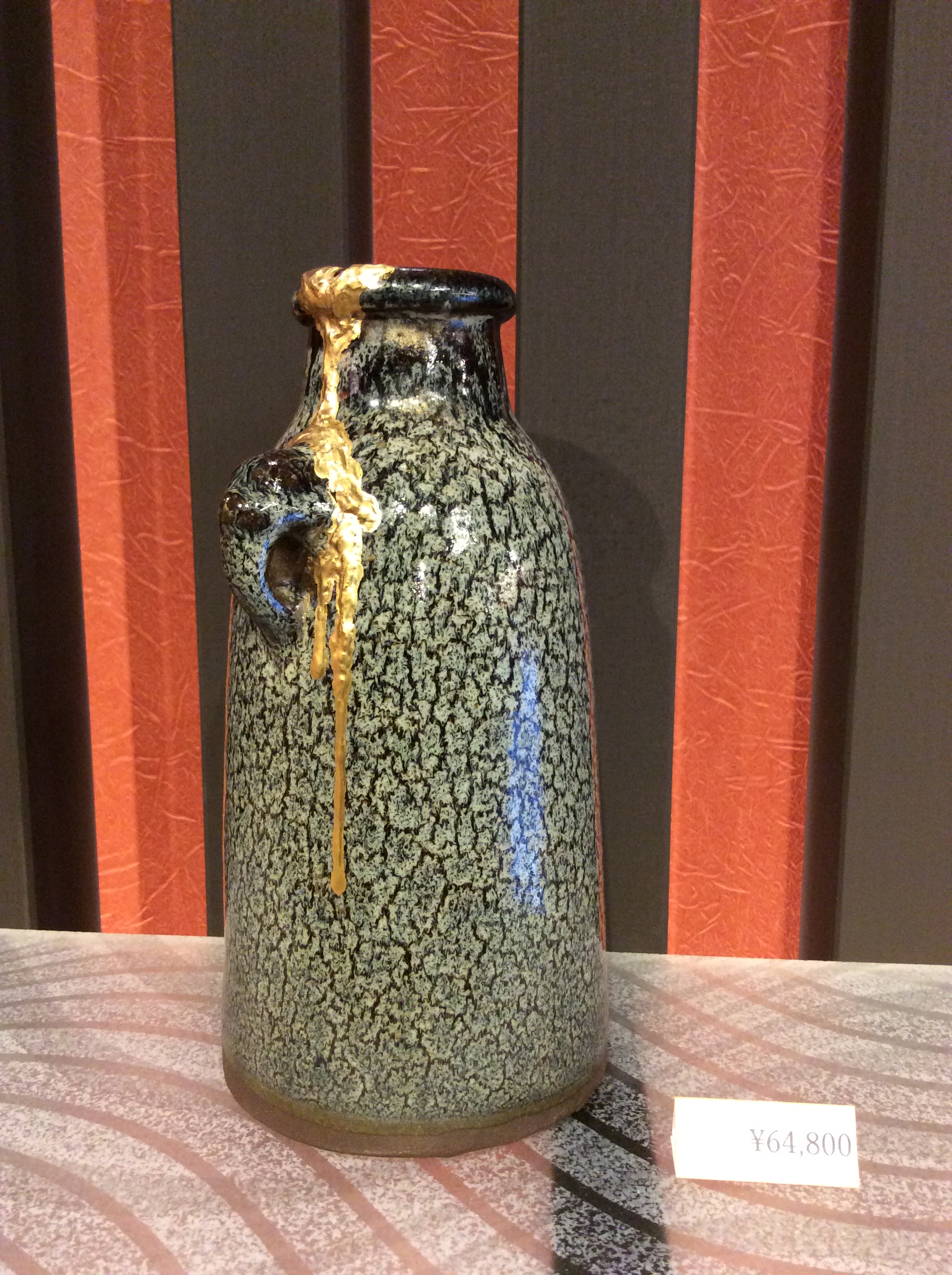
Kintsugi is the ancient technique of restoring cracks and chips in pottery with gold and urushi—Japanese lacquer.
It is surprising that in Jomon period (14,000 – 300 BC), people already using this technique to restoring cracks and chips in pottery in Japan.
I thought it’s very interesting, and really impressed the idea of kintsugi. By using urushi and gold leaf, you can make beautiful one more than the original like this below:
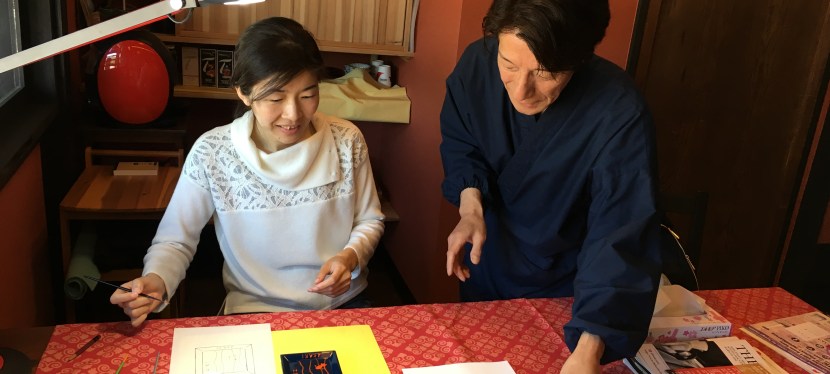
The other day, I experienced workshop which I make an original incense dish with gold leaf decorations, similar experience of kintsugi, taught by Mr. Kiyokawa, a lacquer restoration artist.
then I made this:
So I made airbnb experience tour that people can experience this and small tour around the place: https://www.airbnb.jp/experiences/259350
Last week, a lady from France who take my Japanese lessons come to Kyoto with her husband and experienced this tour.
Twice a month, my friend and I organize the event, “Let’s talk about Kyoto in English and Japanese”. Today’s theme was Furoshiki.
I took memo of useful expression 🙂
(All from “Trad Japan” NHK publisher has copy right.)
__________________________________________________________________
Simple, square pieces of cloth like this made of cotton, silk, or other materials…They’re called furoshiki.
木綿や絹などでできた何の変哲もない真四角な布。これが風呂敷です。
Furoshiki are versatile wrapping cloths. Not only are they useful for carrying things, they also make gifts look more attractive.
何でも柔らかく包み込む風呂敷は、荷物を持ち運びしやすくするだけでなく、贈り物を美しく飾る効果もあります。
The word furoshiki comes from the culture of the bath, or furo in Japanese.
風呂敷という呼び名は日本語の「風呂」に由来します。
In the 14th century, when samurai and aristocrats used a communal bath, they would take a change of clothes wrapped in a cloth. After bathing, they would use the cloth as a bath mat on which to get dressed. Shiki means ‘something spread on the floor’, so the cloths used when taking a furo came to be known as furoshiki.
14世紀ころ、武士や貴族が共同風呂に入る時、着物を布に包んで持ち運びました。入浴が終わるとその上で着替えをしました。それが「風呂敷」という名前になったと言われています。
Later, the use of furoshiki spread to ordinary people, and they became an essential item for carrying things.
その後、風呂敷は庶民に広がり、物を運ぶのに欠かせない道具になりました。
Furoshiki can be used to wrap just about anything.
風呂敷は包むものに合わせて自在に形を変えていきます。
They can even be used to wrap bottles of wine.
ワインの瓶などを包むこともできます。
You roll two bottles up in a furoshiki. Then stand them upright, which folds the furoshiki in the middle. Finally, bring the corners together and tie them in a knot. This wrapping method helps to keep fragile bottles from breaking and creates an easy-to-carry handle.
2本の瓶を転がしながら包み、真ん中で折り曲げて、上に結び目をつくります。こうすることで壊れやすい瓶を守りながら、持ちやすい取っ手を作ることができます。
With a furoshiki, there’s also a way to wrap a long box that seems too big for the cloth.
布には不釣り合いな細長い物を包むこともできます。
Bring the near corner and the far corner together, intertwine them, take one end to the left-hand corner and the other to the right-hand corner, and tie a knot at both ends.
前後の角を真ん中で交差させ、左右に振り分けます。それを端の角と結び合わせると、全体を包むことができます。
The fact that a piece of cloth can be folded into various shapes to contain almost any object is the most distinctive characteristic of furoshiki.
1枚の布が、折り方一つでどんなものでも包み込んでしまう。これが風呂敷の最大の特徴です。
Furhisoki used for wrapping gifts often have auspicious patters on them.
贈り物を包む風呂敷には、よく縁起が良い文様が描かれています。
This one depicts pine, bamboo, ume plum, the crane, and the turtle, which all symbolize good fortune.
この風呂敷には縁起のよい文様である、松、竹、梅、鶴、亀が描かれています。
It’s traditionally believed that wrapping a gift with a cloth featuring auspicious symbols like these keeps the gift pure.
縁起の良い布で包むことは、贈り物を清浄に保つと信じられてきました。
Furoshiki are not just a means of wrapping objects.
These cloths are used to express respect for others and to wish them good luck.
単に物を包むだけでなく、相手に敬意を示し、繁栄を願って使われる1枚の布。
The Japanese put a lot of thought and heart into gift giving, and furoshiki are clear evidence of that sensibility.
風呂敷には、日本人が贈り物に込めた細やかな心遣いが現れているのです。
(All from “Trad Japan” NHK publisher has copy right.)
______________________________
Wearing a kimono bearing a family crest makes the wearer look more formal.
紋付の着物を着ると、よりフォーマルに見えます。
communal bath 共同風呂
communal kitchen 共同キッチン
communal space 共有スペース
結び目をつくる tie a knot
結婚する tie the knot
An obijime goes around an obi sash and is tied at the front in a knot.
帯締めは帯の周りに巻いて、正面で結び目を作ります。
pure の名詞形はpurity, 「〜をpure にする」はpurify-
反対語はimpurity
In Buddhism, the world of the enlightened is called the jodo, or the Pure Land.
仏教では、悟りを開いたものの世界を浄土と言います。
Wasabi only grows in fresh, pure water.
わさびは清らかな真水の中でしか育ちません。
(All from “Trad Japan” NHK publisher has copy right.)













 Akari Japanese